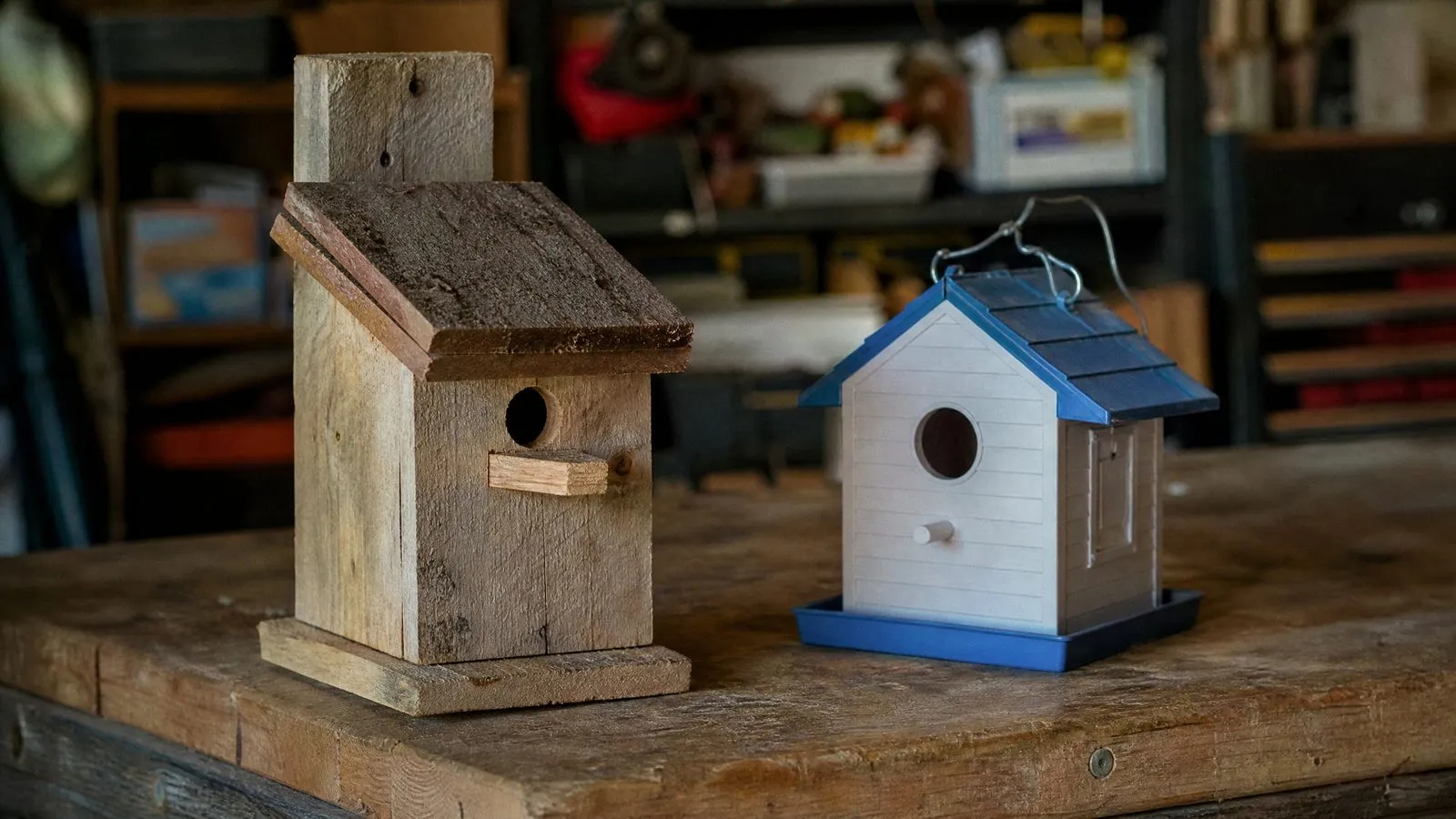

Owners ask me this a lot, usually after a friend swears by a builder they set up in a weekend. Both options can work. They work for different jobs, so the right question is what you need your website to do.
The one question
Does your website have to win customers from search?
If it only has to exist, so that someone who already knows your name can find your phone number, a do-it-yourself builder is a perfectly good choice. If it has to compete in Google and Maps against other businesses, across several services and several towns, the answer changes.
Where a builder shines
A do-it-yourself builder is fast and cheap to start, and you can change a phone number or a photo yourself on a Sunday night. You can have a clean, simple site up in days. For a one-person business with a steady stream of referrals, or a new business that needs something live this week, that is a real advantage.
Where a builder holds you back
The limits show up when you want to grow. Many builders make it hard to create dozens of well-structured pages, control how fast the site loads, or shape exactly how the pages are built underneath. Those things matter for search. You are also the one doing the work, which means writing every page, picking every photo and fixing every problem yourself, and the time adds up.
Ownership can be tricky as well. Some builders let you export your site, and some don’t. Before you invest in one, find out what happens if you ever want to move.
Where a custom site earns its cost
A custom site can be built around how your customers search. A page for each service, a page for each place you serve, fast loading on a phone, clean structure, and room to grow. Those pages are where local searches get won. In Tampa Bay, where a customer in Brandon and one in South Tampa see the area very differently, local pages carry real weight.
It also takes the work off your plate. Somebody else writes, builds and tests it, so you can run the business.
Where a custom site disappoints
It costs more than a builder, and it takes longer. It also depends entirely on who builds it. A custom site that is slow, vague or locked to its builder is a worse deal than a simple one you control. That is why who owns your website and what the contract says matter so much.
Where I stand
If you want to work with me on SEO, I won’t work on a site built with a drag-and-drop builder like GoDaddy’s, Squarespace or Wix. We rebuild it from scratch on WordPress or one of the newer AI-built platforms first. That is a hard line for me, and it comes from the limits I described above. It doesn’t mean those builders are wrong for everyone. It means I can’t do my best work inside them.
A quick way to decide
- A builder fits if you mostly get work through referrals, serve one town, offer one or two services and are comfortable doing the work yourself.
- A custom site fits if you want calls from search, serve several towns, offer several services, or have already outgrown a builder.
- Starting with a builder and upgrading later is a legitimate plan. Just keep your domain and your content in your own hands so a move is easy.
What either choice needs
The basics don’t change. A tappable phone number, real photos of your work, clear pages for each service, and reviews people can see. A website that gets calls lists the seven things I would check first, and they apply whichever way you build.
If you are not sure
Look at your own numbers. Where do your calls come from today? If search already brings you business and you want more, a stronger site is worth it. If referrals fill your calendar, don’t change what works. When you want to talk it through, the web design page shows our approach, and what a website costs covers how to compare quotes. You are welcome to call us either way.